Kristi Noem's Bold Vision: A $1.5 Billion Investment in Drone Surveillance & Defense
In an era of evolving global threats, securing national airspace and protecting critical events has become paramount. Leading this charge, Kristi Noem, in her capacity at homeland security discussions, has unveiled an ambitious $1.5 billion plan to significantly bolster the nation's capabilities in drone surveillance and defense. This substantial investment underscores a proactive and aggressive stance against unmanned aerial threats, signifying a pivotal shift from mere detection to active mitigation. The initiative highlights a comprehensive approach to national security, positioning the administration's efforts as a sophisticated surveillance agence under Noem's direction, dedicated to safeguarding American citizens and infrastructure.
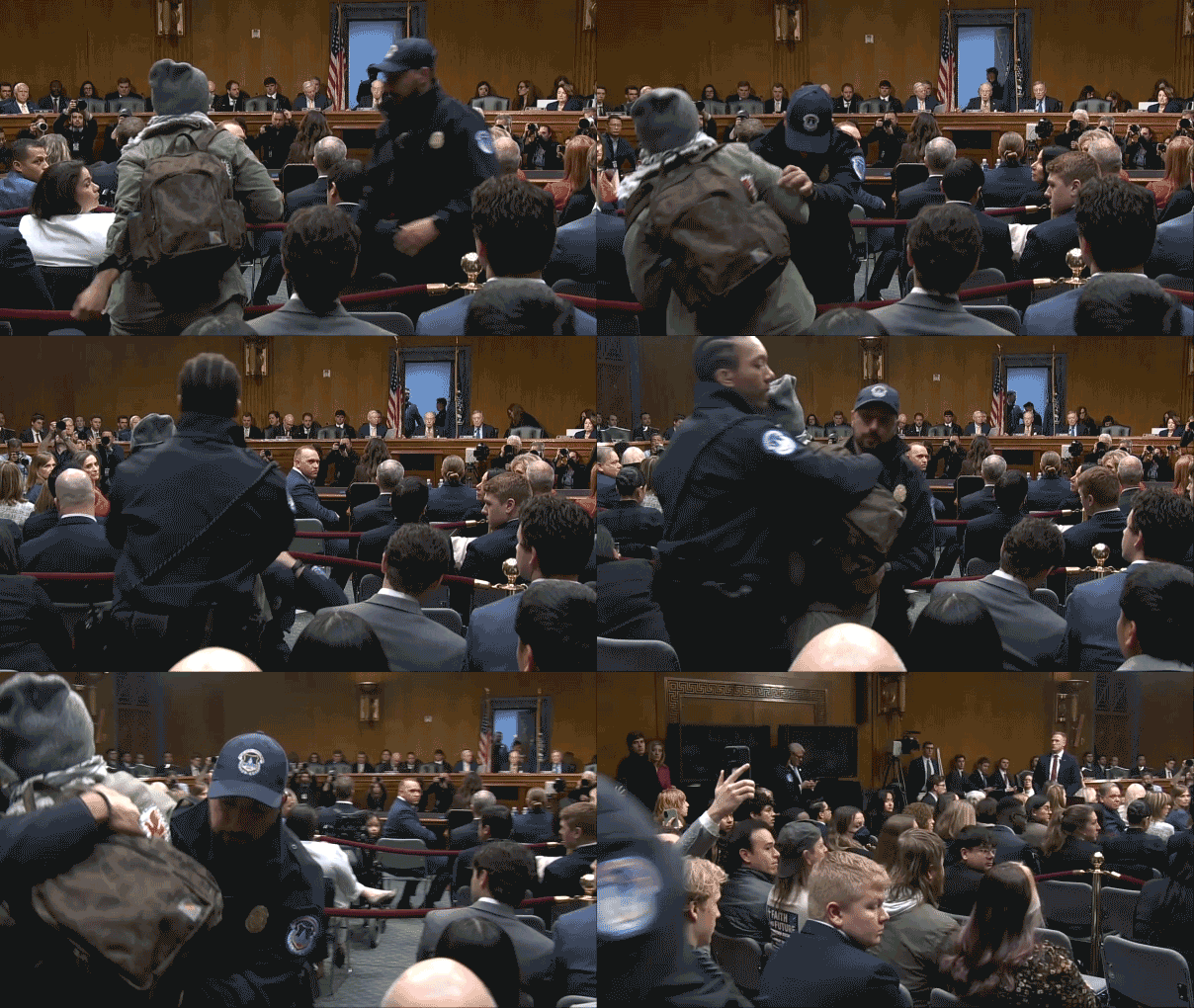
The announcement came during a House Homeland Security Committee hearing where immigration, counterterrorism, and the rising peril of drones dominated the agenda. Noem's strategy, particularly its focus on counter-drone technology, reflects a keen awareness of modern security challenges, especially with major international events like the 2026 FIFA World Cup on the horizon. This article delves into the specifics of this multi-billion dollar plan, its implications for national security, and how it integrates with broader surveillance and vetting priorities championed by Noem.
The Evolving Threat Landscape: Why Drones Demand Aggressive Action
The proliferation of drone technology, while offering immense commercial and recreational benefits, simultaneously presents a complex and growing threat to national security. Small, commercially available drones can be easily modified for malicious purposes, ranging from espionage and unauthorized surveillance to the delivery of contraband, or even as weaponized platforms. Their accessibility, affordability, and versatility make them a potent tool for various adversarial actors, including terrorist groups, criminal organizations, and nation-state adversaries.
- Espionage and Intelligence Gathering: Drones equipped with high-resolution cameras can easily capture sensitive information about critical infrastructure, military installations, or public gatherings, posing a significant intelligence risk.
- Disruption of Events: Unauthorized drones can cause chaos and fear at large public events, leading to evacuations, security breaches, and potential economic losses. The specter of disruption at high-profile events like the FIFA World Cup is a major concern.
- Smuggling and Contraband: Drones have been used to smuggle drugs, phones, and other illicit items into prisons or across borders, circumventing traditional security measures.
- Weaponization: Perhaps the most alarming threat is the potential for drones to be weaponized, carrying explosives or chemical agents, capable of causing mass casualties or significant damage. The simplicity of adapting off-the-shelf drones for such purposes makes this a terrifying prospect.
This evolving threat landscape necessitates a robust and proactive defense strategy. Noem's $1.5 billion plan directly addresses these vulnerabilities, acknowledging that traditional security measures are often insufficient against agile aerial threats. The investment signals a commitment to staying ahead of adversaries by deploying cutting-edge technology and developing sophisticated operational protocols.
Kristi Noem's Vision: Beyond Detection to Active Mitigation
A key takeaway from Noem's testimony is her insistence on moving beyond passive observation. "We don’t want just to detect, we don’t want to just monitor, we need to mitigate. We need to take these drones down," Noem stated unequivocally. This declaration marks a significant shift in strategy, emphasizing an active, interventional approach to drone threats. The $1.5 billion investment is earmarked for developing and deploying advanced drone and counter-drone technology capable of achieving this aggressive objective.
What Does "Taking Down Drones" Entail?
The concept of "taking down" a drone involves a range of technologies and tactics, each with its own advantages and challenges:
- Electronic Warfare (Jamming): This involves using radio frequency jammers to disrupt a drone's communication link with its operator, causing it to land or return to its launch point.
- Kinetic Interception: More aggressive methods include physically intercepting drones using net-firing guns, high-powered lasers, or even other "interceptor" drones designed to capture or disable rogue UAVs.
- Cyber Takeovers: Sophisticated cyber capabilities can exploit vulnerabilities in a drone's software or communication protocols, allowing security forces to take control of the drone or force it to land safely.
- Acoustic and Thermal Detection: While falling under "detection," advancements in these areas improve the ability to identify drones in complex environments, providing more time for mitigation strategies to be employed.
The challenge lies not only in the technology itself but also in the complex legal and operational frameworks required to safely and effectively deploy these countermeasures, especially in populated areas. The plan likely involves significant investment in R&D, procurement of state-of-the-art systems, and comprehensive training for personnel tasked with operating this advanced equipment. This aggressive posture illustrates a strong commitment from the surveillance agence under Noem's leadership to neutralize threats before they can cause harm.
Broader Surveillance & Vetting Priorities: A Holistic Security Approach
Noem's focus extends beyond just drone defense. Her statements also highlighted broader concerns about national security, specifically referencing immigration and counterterrorism efforts. Alongside National Counterterrorism Center Director Joe Kent, Noem raised concerns about lax vetting procedures, particularly citing claims of 2,000 Afghans and 16,000 other individuals in the U.S. with alleged terror ties following the November National Guard shooting. While details and evidence for these numbers were not publicly provided, Noem underscored the administration's resolve.
"That is why we were so aggressive at making sure that we’re going out and doing investigative work, finding those violent criminals, finding those people who shouldn’t be in this country to begin with, and those that want to go after and harm our American citizens," Noem asserted. This statement underscores a comprehensive approach to homeland security, where intelligence gathering, rigorous vetting, and proactive investigative work are paramount.
The Nexus of Physical and Digital Security
The drone defense initiative, while physical in its outcome, is deeply intertwined with a broader surveillance infrastructure. Effective counter-drone operations require:
- Advanced Sensor Networks: Integrating radar, optical, and acoustic sensors to detect and track drones.
- Intelligence Sharing: Rapid dissemination of threat intelligence across various agencies.
- Data Analytics: Utilizing big data to identify patterns, predict potential threats, and optimize deployment of resources.
This integration of physical countermeasures with sophisticated data analysis and intelligence operations defines the modern security landscape. The discussion around vetting procedures and identifying individuals with terror ties further solidifies the role of a robust surveillance agence under Noem, leveraging both human intelligence and technological capabilities to secure the nation from within and without.
Practical Implications and Future Outlook
The $1.5 billion investment in drone surveillance and defense carries significant practical implications for national security. It signifies a major upgrade in capabilities for agencies responsible for protecting borders, critical infrastructure, and public events. This investment will likely spur innovation in the defense technology sector, leading to more sophisticated and cost-effective solutions for mitigating drone threats.
For individuals and businesses, the increased focus on drone defense means enhanced security at major gatherings, airports, and other sensitive locations. However, it also raises important discussions about airspace regulations, privacy, and the appropriate use of counter-drone technologies in civilian areas. Striking a balance between robust security and preserving civil liberties will be a continuous challenge.
This aggressive posture, driven by the urgency of protecting global events like the FIFA World Cup and the broader need to counter evolving terror threats, positions the U.S. at the forefront of drone defense technology. The strategic vision articulated by Kristi Noem emphasizes a future where the surveillance agence plays a pivotal role not just in observing threats, but in actively neutralizing them.
In conclusion, Kristi Noem's proposed $1.5 billion investment in drone surveillance and defense represents a significant escalation in the U.S.'s commitment to national security. By moving beyond passive detection to active mitigation, the strategy aims to create a formidable defense against the growing threat of unmanned aerial systems. This focused effort, combined with broader priorities in vetting and intelligence gathering, underscores a comprehensive and proactive approach to protecting American citizens and securing the homeland. The initiatives highlight the multifaceted role of a modern surveillance agence, leveraging technology and strategic policy to navigate the complexities of contemporary threats.